Wired and Wrecked: What Hardcore Sports Fans Are Sacrificing for That 3 AM Kickoff
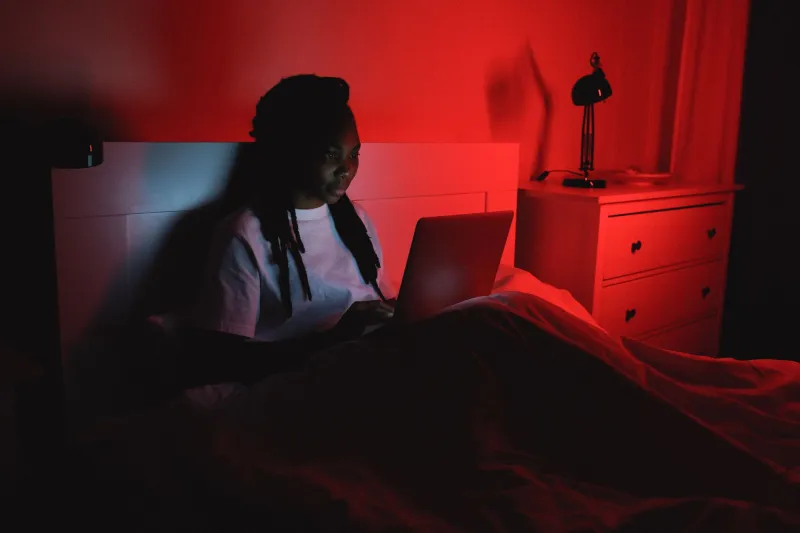
It's 2:47 AM on a Tuesday in Columbus, Ohio. Marcus, a 34-year-old high school teacher, is not asleep. He's got a cold brew cracked open, his laptop angled just right to avoid waking his wife, and he's about ten minutes away from watching his beloved Liverpool take on Real Madrid in a Champions League knockout match being played six time zones away.
"I set three alarms," he told us. "One at 2:30 to wake up. One at 2:40 in case I fall back asleep. And one at 2:50 as a last resort. By that point, I just feel shame if I'm still in bed."
Marcus isn't alone. Across the United States, a quietly massive subculture of sports fans has essentially rewired their biological clocks to stay locked in with global competitions that have zero interest in catering to American bedtimes. Whether it's Premier League soccer from England, Indian Premier League cricket, Super Rugby from Australia, or Formula 1 races from Singapore, the games don't wait — and neither do these fans.
Here at STV365, we're built around the idea that live sports and entertainment don't take days off. But even we had to stop and ask: at what point does 365-day fandom stop being a lifestyle and start being a sleep disorder?
The Timezone Math Is Brutal
Let's get real about what these fans are actually dealing with. A Premier League match kicking off at noon in London lands at 7 AM on the East Coast — manageable, honestly, if a little early on a Saturday. But a Champions League midweek match at 8 PM Central European Time? That's 2 PM Eastern, which is fine. Until the knockout rounds, when some matches tip off at 9 PM over there, pushing East Coast viewers to 3 PM and West Coast folks to noon. That part's actually great.
The real brutality kicks in with cricket and rugby. The Indian Premier League, one of the most-watched sporting competitions on the planet, regularly schedules matches that start at 7:30 PM IST — which translates to 10 AM Eastern during standard time. Not terrible. But double-headers and later fixtures can push start times to 11 PM IST, landing squarely at 1:30 PM ET. Again, workable.
But Super Rugby matches from New Zealand? Australian Rules Football? Some of those broadcast windows hit American audiences between midnight and 4 AM, no exceptions, no compromises.
"I've just accepted that certain months of the year, I'm running on six hours," says Priya, a software developer in Austin who follows Indian cricket with near-religious devotion. "During the IPL, I'm fine. During a tour of Australia? I'm basically a zombie from January through February."
The Coping Strategies Are Actually Kind of Genius
What's fascinating about this community isn't just the sacrifice — it's the elaborate systems they've built to survive it. These aren't just people white-knuckling through exhaustion. They've developed legitimate, almost scientific approaches to fragmented sleep.
Strategic napping is the most common tool. Multiple fans we spoke to described taking a 90-minute nap immediately after work — timing it precisely to complete a full sleep cycle before waking up for a late match. "If I do it right, I feel almost normal by midnight," says Derek, a logistics manager in Phoenix who follows English soccer and Australian rugby simultaneously.
Caffeine cycling is another big one. Rather than drinking coffee all day and crashing hard, dedicated fans describe carefully timing their intake — nothing after 6 PM, then a targeted hit of cold brew or espresso right before the match starts, followed by a deliberate wind-down strategy to get back to sleep by 5 AM.
Some fans have gone even further. Marcus, our Columbus teacher, described shifting his entire sleep window on weekends during heavy European fixture periods — going to bed at 7 PM Friday and Saturday nights to bank sleep before late matches, then recovering Sunday afternoon.
"My neighbors probably think I'm either extremely healthy or going through something," he laughed.
What the Experts Actually Think
Sleep researchers and sports medicine professionals have some thoughts on all this, and they're not entirely doom and gloom — but they're not exactly cheering either.
The consensus is that occasional late-night viewing is fine. The human body is actually somewhat adaptable to short-term schedule shifts, especially when those shifts are predictable and planned for. The problem is chronicity — when "occasional" becomes "every Tuesday, Wednesday, and weekend from September through May."
Prolonged sleep disruption is linked to everything from impaired cognitive function and mood instability to longer-term cardiovascular concerns. For fans who are doing this across multiple sports seasons with barely any breaks, the cumulative effect can be real.
That said, several fans pushed back on the framing of pure sacrifice. "I sleep worse when I miss a big match and then spend the next morning doom-scrolling highlights and feeling like I missed something," Priya told us. "At least when I watch live, I'm present. There's something mentally satisfying about that, even if my body is tired."
There's actually some support for that perspective in the research. The psychological benefits of live sports engagement — community, emotional release, a sense of belonging — are well-documented. For dedicated fans, the mental boost of watching live may genuinely offset some of the physical cost.
The Watch Party Workaround
One solution that's gained real traction is the organized watch party — either in person at a local soccer bar or pub, or virtually through platforms and group chats. There's something about shared misery (and shared joy) that makes a 3 AM alarm feel less brutal.
"I'm in a WhatsApp group with eleven other Liverpool fans across four states," Marcus said. "We're all up at the same time, texting through the match. It genuinely doesn't feel lonely. It feels like being part of something."
That sense of community is a huge part of why these fans keep doing it. The global sports calendar has essentially created a new kind of social tribe — one that exists entirely in the pre-dawn hours, united by shared teams and shared exhaustion.
Is It Worth It? Ask Them After a Trophy Lift
Here's the thing about sports fandom that no productivity guru or sleep coach can fully account for: the highs are real. When Liverpool wins. When India takes a test match on Australian soil. When your team lifts a trophy and you watched every single minute of the run — live, in the moment, not spoiled by a notification — that feeling is something.
Derek in Phoenix put it plainly: "I've tried watching on delay. I've tried highlights. It's not the same. I know logically it shouldn't matter, but it does. Being there in real time, even at 3 AM on a couch in my pajamas — that's the experience."
At STV365, we get it. The whole point of this platform is that sports and entertainment are a year-round, around-the-clock conversation. And for the fans living on the extreme edge of that reality — the ones setting three alarms and cycling their caffeine and napping at 5 PM — we see you.
You're tired. You're committed. And honestly? We respect the dedication.
Just maybe drink some water.