Your Group Chat Is Tearing Your Friend Group Apart
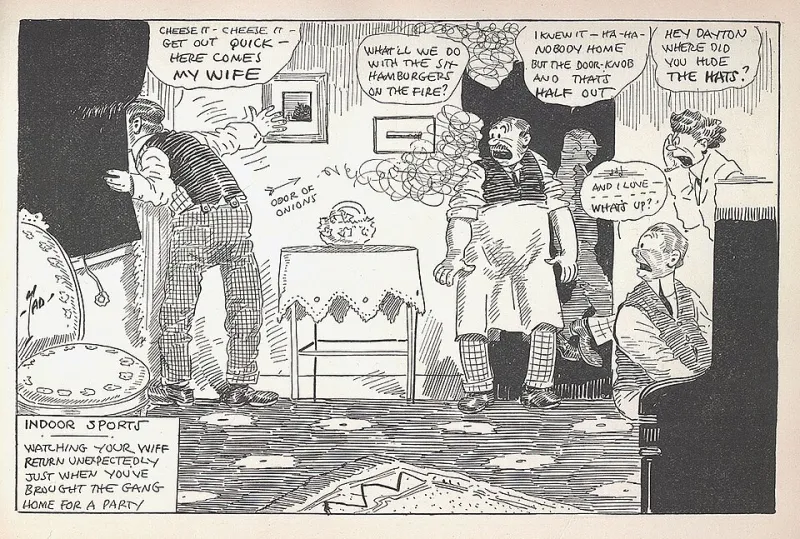
Photo: Tad Dorgan, Public domain, via Wikimedia Commons
Remember when watching sports was simple? You called your buddy, you showed up at someone's place with a six-pack, and you argued about the game on the drive home. That was it. Now you've got a 47-person Discord server, three separate group chats sorted by sport, a fantasy league that generates its own drama, and a Twitter/X feed that never, ever stops. Somewhere in all that noise, something got lost — and it might be your actual friendships.
Here's the uncomfortable truth nobody in your group chat wants to say out loud: having infinite ways to connect with fellow fans has made it genuinely harder to just be present with the people sitting right next to you.
The Illusion of Togetherness
There's a particular kind of loneliness that hits when you're watching a massive game with your closest friends — and every single person in the room is also half-watching their phone. Someone's live-tweeting. Someone else is furiously typing into the group chat with their college roommates three time zones away. Another person is posting a take to Reddit before the play even fully develops on screen.
Technically, everyone is "watching together." Emotionally, everyone is somewhere else entirely.
The sports media landscape — and platforms like this one built around 365-day access — have made it possible to be a fan at literally any hour, from any location, in the company of virtually anyone. That's genuinely incredible. But it's also created a situation where your physical presence at a watch party has become almost secondary to your digital presence everywhere else. You're there, but you're also not really there.
Time Zones Are the New Relationship Killer
Here's a scenario that's become painfully common: your best friend moved to the West Coast two years ago. You're in Chicago. Your other buddy is in New York. Kickoff is at 8:30 PM Eastern for a Sunday night game — which means it's 7:30 in Chicago and 5:30 in Seattle. Your East Coast friend wants to talk through the whole first half live. Your Seattle friend is trying to watch while feeding his kids dinner. You're somewhere in the middle, trying to keep both conversations going while actually watching the game.
By halftime, someone's annoyed. Someone feels left out. And the group chat — which was supposed to be the solution — has become the source of the tension.
Sports never stop anymore. That's the whole point of year-round platforms and always-on coverage. But human beings still have jobs, kids, sleep schedules, and lives that don't run on a 24/7 broadcast cycle. The gap between what the sports world demands and what real friendships can sustain is getting wider every single season.
The 24/7 Engagement Tax
Group chats have an unspoken social contract, and sports group chats are the worst offenders. There's a pressure — rarely stated, always felt — to be on. To respond to the hot take before it goes cold. To post the reaction GIF within thirty seconds of the big play. To be present, engaged, and entertaining at all times, or risk being seen as the person who just doesn't care as much.
Psychologists have a term for this kind of low-grade, constant social obligation: it's called "ambient awareness," and while it can create a sense of closeness, it can just as easily create exhaustion and resentment. When your friend group's sports chat goes off at 11 PM on a Tuesday because someone wants to debate a trade rumor, and you've got a 6 AM alarm set, the chat stops feeling like community and starts feeling like homework.
And here's the real kicker — the people most likely to burn out and quietly mute the chat are often the ones who care the most. They're not disengaging because they don't love their friends or their teams. They're disengaging because they're completely overwhelmed.
When Fandom Becomes a Competitive Sport
There's another layer to this that's worth talking about honestly: sports group chats have a way of turning friendship into a subtle competition. Who had the best take? Who called the outcome? Who knew about the injury first? Who's been watching more games, tracking more stats, staying up later?
This stuff starts small. A little friendly ribbing here, a bit of one-upmanship there. But over time, it can quietly shift the dynamic of a friendship that used to be built on genuine mutual enjoyment into something that feels more like an ongoing audition. You're not just watching sports with your friends anymore — you're performing fandom for them.
And when someone in the group doesn't want to perform? When they'd rather just watch the game without documenting it in real time? Suddenly they seem less committed. Less fun. Less of a fan. The irony is brutal: the very tools designed to deepen fan engagement are creating a hierarchy within friend groups that has nothing to do with actual friendship.
What You're Actually Missing
Ask anyone who's been a die-hard sports fan for twenty or thirty years what their best memories are, and almost none of them involve a group chat. They involve a specific couch, a specific city, a specific game, and the specific people who were in the room. The arguments that started during commercials and lasted until 2 AM. The spontaneous road trip to catch a playoff game. The silence in the car after a brutal loss.
Those moments required presence — real, undivided, phones-in-pockets presence. They required being with people rather than just around them.
The access we have now is extraordinary. There is something genuinely special about being able to watch any game, any sport, any time, with a community of fans who get it. But access isn't intimacy. A 200-person Discord server isn't the same as four people losing their minds together on someone's living room floor.
Finding the Balance Before Someone Gets Muted for Good
None of this means you need to blow up your group chats or go off the grid. It just means being a little more intentional about when the phone stays in your pocket and when it doesn't.
Set some ground rules with your crew. Maybe the first half of the game is phones-down time. Maybe the group chat has a "no takes before 9 AM" policy. Maybe you actually schedule real watch parties — not just the ones where everyone's in the same room but in five different digital conversations — where the whole point is to just be in the moment together.
The sports world isn't going to slow down. Platforms will keep expanding. The content will keep coming. But your friendships — the real ones, the ones built on shared history and actual time spent together — those require a little more protection than your streaming queue does.
Because at the end of the day, no group chat, no matter how active, is going to replace what it feels like to actually be there.