Gym Cam Nation: Why Watching Athletes Work Out Has Become Its Own Sport

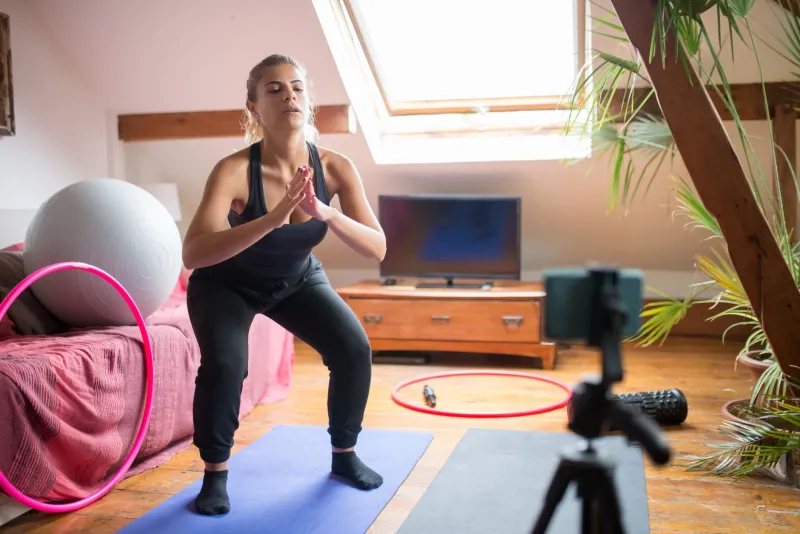
Photo by Photo by Marcos Paulo Prado on Unsplash on Unsplash
Pat McAfee probably didn't predict this when he was kicking footballs for the Colts. Neither did Draymond Green, or Saquon Barkley, or any of the dozens of athletes who started pointing cameras at themselves during workouts and discovered that people — a lot of people — would just... watch.
Not highlights. Not game recaps. Not press conferences. Just a camera in a gym, an athlete breathing hard, and a comment section going absolutely feral.
Welcome to one of the stranger entertainment phenomena of the current sports moment: the rise of the training stream, and the very real possibility that it's becoming more compelling content than the games it's supposed to be preparing athletes for.
The Numbers Are Hard to Argue With
Let's start with some context. The average NFL regular-season game draws somewhere between 15 and 20 million viewers on a good week. That sounds massive — and it is. But consider that a single off-season workout video from a player like Tyreek Hill or Patrick Mahomes can routinely hit 5 to 10 million views across platforms within 48 hours, with no broadcast deal, no production budget, and no marketing spend behind it.
On TikTok, fitness content from professional athletes consistently outperforms highlight compilations. On YouTube, training day vlogs from NBA players regularly crack a million views before the algorithm even starts pushing them. Instagram Reels featuring nothing more than a wide receiver running routes in an empty field generate engagement rates that official league accounts would kill for.
The math is uncomfortable if you're a network exec who just paid nine figures for broadcast rights. It's very comfortable if you're an athlete who just bought a decent tripod.
Why Raw Beats Polished — Every Single Time
There's a production quality paradox at work here, and it's worth sitting with for a second.
Official sports broadcasts are extraordinary technical achievements. The camera work, the graphics, the commentary, the replays — it's a refined product built over decades. And yet a sweaty athlete filming themselves doing box jumps in their garage at 6 AM will outperform it for engagement on nearly every social platform.
The reason, according to sports media analysts and the fans we talked to, comes down to one word: access.
"When I watch a game, I'm watching what the broadcast wants me to see," said Marcus, a 28-year-old Bucks fan from Milwaukee. "When I watch Giannis doing footwork drills in the off-season, I feel like I'm actually seeing him. Not the product. Him."
That distinction — the product versus the person — is doing a lot of heavy lifting in the current entertainment landscape. Fans have developed a sophisticated allergy to anything that feels packaged. Training content, almost by definition, can't be fully packaged. The effort is real. The struggle is visible. When a 250-pound lineman fails a lift and has to reset, that moment of human fallibility is worth more to a fan's emotional connection than a hundred perfectly executed broadcast graphics.
Teams Are Watching — and Some Are Nervous
Here's where it gets interesting from a league perspective.
Athletes filming their own training content sit in a complicated space for teams and franchises. On one hand, the content builds fan engagement, drives jersey sales, and keeps athletes relevant during the off-season when the official broadcast calendar goes quiet. On the other hand, it's completely outside the team's control.
What gets shown. What gets said. What the facility looks like. Who else is in the frame. All of it is in the athlete's hands, not the organization's. And athletes — especially younger ones who grew up as digital natives — are not shy about using that freedom.
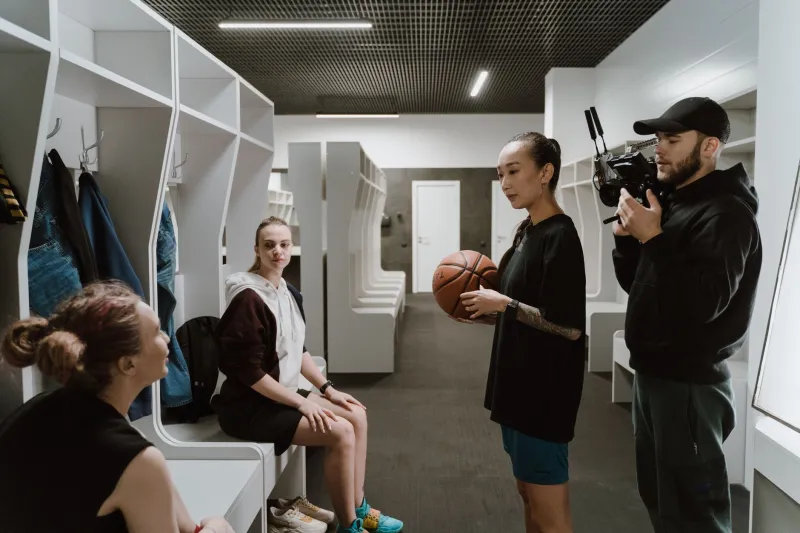
Several NBA teams have quietly implemented informal guidelines around facility filming. A few NFL franchises have had conversations with their communications departments about what's appropriate to share during training camp. None of them want to be the team that told their star player to stop making content that millions of people love — but none of them are entirely comfortable with a camera they don't control, either.
The Year-Round Entertainment Play
From a pure content calendar standpoint, training streams solve a problem that sports broadcasters have wrestled with forever: the off-season dead zone.
At STV365, we're always talking about year-round entertainment — the idea that there's always something worth watching, always a live moment worth tuning in for. Athlete training content fits that philosophy perfectly. It doesn't require a game to exist. It doesn't need a broadcast window. It shows up on a Tuesday in February when the sports calendar is thin and it gives fans something to care about.
The platforms that have leaned into this — YouTube especially, but increasingly TikTok and Instagram — are functionally offering a parallel sports entertainment product that exists alongside the official broadcast calendar rather than competing with it. Smart leagues and teams are starting to figure out how to integrate rather than resist.
The Athletes Who Are Getting It Right
Not all training content is created equal, and the athletes who've cracked the code share some common traits.
They're consistent. They post regularly enough that audiences develop a habit of checking in. They're honest — the bad days make it into the feed alongside the good ones. And they understand that their audience isn't just looking for fitness inspiration. They're looking for connection.
Klutch Sports clients have been particularly savvy about this. Several UFC fighters have built enormous training followings that rival their fight-night audiences. Women athletes — often underserved by traditional broadcast deals — have found in training content a direct line to fan bases that official sports media sometimes ignores entirely.
What It Means for the Future of Sports Content
The training stream phenomenon raises a question that nobody in sports media has quite figured out how to answer yet: if fans are increasingly satisfied by athlete-generated content, what exactly are they paying for when they subscribe to a broadcast package?
The honest answer is that live games still have something training content can't replicate — the unpredictability of competition, the stakes, the shared experience of watching something happen in real time. That's not going away.
But the training stream has proven that the game is no longer the only place the story lives. The preparation, the struggle, the grind between the official moments — that's a story too, and fans are watching it in enormous numbers.
Put a camera in a gym and point it at someone who's genuinely working. Turns out that's appointment television. Nobody needs a broadcast deal to make that happen.