Drowning in the Deep End: How Infinite Sports Access Is Quietly Breaking Fans
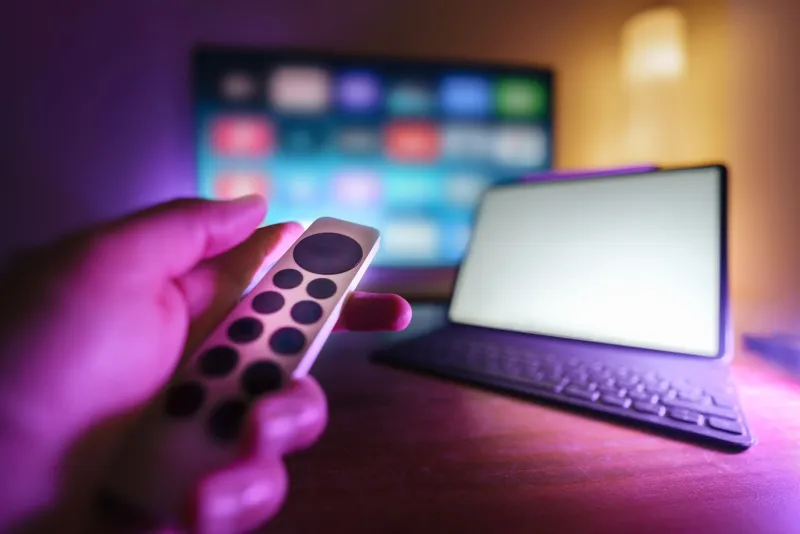
Picture this: it's a random Tuesday night in January. There's an NBA doubleheader, a Champions League group stage match streaming live, a college basketball game you've been meaning to catch, three different sports documentaries you bookmarked two months ago, and somewhere buried in your queue, a replay of last weekend's NFL wild card game you still haven't finished. You've got the remote in your hand, the apps are open, and somehow — despite all of it being right there — you end up watching nothing. Or worse, you spend forty-five minutes flipping between tabs before settling on something you don't even really want to watch.
Welcome to the paradox of choice, sports fan edition.
This isn't just a quirky personal habit. It's a documented psychological phenomenon, and it's hitting sports fans harder than almost any other entertainment audience out there. In an era where platforms like the ones powering STV365 are built to give you live sports and entertainment every single day of the year, the abundance that was supposed to liberate fans has, for many, quietly become a source of genuine stress.
When More Options Mean Less Enjoyment
Psychologist Barry Schwartz popularized the concept of the "paradox of choice" back in 2004, arguing that an overload of options doesn't make people happier — it makes them more anxious, more second-guessing, and ultimately less satisfied with whatever they do choose. That theory was written before streaming existed in any meaningful way. Apply it to the modern sports media landscape, and it hits different.
"What we're seeing in sports fans specifically is a kind of chronic low-grade anxiety that didn't really exist twenty years ago," says Dr. Melissa Tran, a sports psychologist based in Chicago who works with both athletes and fan communities. "When you had three channels and a regional sports network, the choice was made for you. Now the choice is infinite, and infinite choice is genuinely cognitively exhausting."
The brain, it turns out, isn't wired for endless menus. Every decision — even a small one like picking what game to watch — draws from a finite pool of mental energy. When fans are forced to make dozens of micro-decisions just to start watching something, they arrive at the actual viewing experience already depleted. The joy gets taxed before the opening tip-off even happens.
FOMO Has a New Address, and It Lives in Your Sports App
Then there's the fear of missing out, which streaming has turbocharged into something almost unrecognizable compared to the old days of sports fandom.
Back when you could only watch what was broadcast locally, missing a game felt like a natural part of life. You'd catch the highlights on SportsCenter, read about it in the paper, and move on. Today, every game is theoretically watchable. That theoretical access has transformed "I can't watch that" into "I chose not to watch that" — and that shift in language carries a surprising psychological weight.
"There's a guilt loop that a lot of fans describe to me," says Dr. Tran. "They feel guilty for not watching a game they could have watched. They feel overwhelmed by how much they're 'behind.' And then when they do sit down to watch something, they're half-present because they're thinking about everything else they're missing."
Marcus Webb, a 34-year-old from Atlanta who describes himself as a lifelong sports fan, put it more bluntly in a conversation for this piece. "I have subscriptions to four different platforms. I watch sports almost every night. And somehow I feel like I'm always behind. Like I'm failing at being a fan. Which is insane, right? But that's genuinely how it feels."
It is insane. And it's also incredibly common.
The Neurological Side of the Scroll
Beyond the psychology of choice, there's a neurological dimension to this that researchers are only beginning to fully understand. Constant stimulation — rapid-fire highlights, push notifications, live score alerts, simultaneous streams — keeps the brain's dopamine system in a near-perpetual state of low-level activation. The result isn't deeper engagement. It's something closer to numbness.
"When everything is exciting, nothing is exciting," explains Dr. Jordan Kessler, a neuroscientist at the University of Michigan who studies media consumption habits. "The brain habituates to stimulation. If you're getting a dopamine hit every thirty seconds from a highlight reel, you actually become less responsive to the genuine emotional peaks of watching a live game. The big moments start to feel smaller."
This helps explain something a lot of longtime fans have been noticing without quite being able to articulate it: the sense that sports don't hit the way they used to. It's not that the games have gotten worse. It's that the surrounding noise has gotten so loud that the signal — the actual emotional experience of watching your team, caring about the outcome, feeling something real — gets buried.
The Irony of the All-Access Era
Here's the cruel twist at the center of all this: the very infrastructure built to make fans' lives better is contributing to their burnout. Platforms designed around year-round access, 24/7 availability, and frictionless streaming are doing exactly what they promised. The problem isn't the technology. The problem is that human beings weren't built for frictionless anything.
Some friction, it turns out, is actually good for enjoyment. The anticipation of waiting for a game. The ritual of clearing your schedule to watch something. The scarcity that made a playoff matchup feel genuinely rare and precious. Those weren't bugs in the old broadcast model — they were features, even if nobody recognized them as such at the time.
"Scarcity creates meaning," Dr. Tran says. "When something is always available, it stops feeling special. Fans are experiencing that on a massive scale right now."
Finding Your Way Back to Actually Enjoying Sports
So what do you do with all of this? Canceling your subscriptions and going back to rabbit ears probably isn't a realistic option — nor should it be. The access is genuinely incredible, and used intentionally, it can make the fan experience richer than any previous generation could have imagined.
The key word there is intentionally.
Sports psychologists and seasoned fans who've navigated this terrain successfully tend to offer similar advice: choose fewer things and commit to them more fully. Pick your two or three must-watch events each week in advance, and treat everything else as optional. Turn off the push notifications. Stop treating your sports queue like a to-do list with a completion requirement.
Marcus Webb says he's been experimenting with what he calls a "one game rule" on weeknights — picking one game before the evening starts and sticking with it, no flipping, no second-screening. "It sounds almost too simple," he admits. "But I've actually been enjoying games more. Like, actually enjoying them, not just consuming them."
That distinction — between enjoying and consuming — might be the most important one in modern sports fandom. In a world where platforms like STV365 give you the entire sports calendar at your fingertips every single day, the real skill isn't finding more to watch. It's learning how to watch less, better.
The games aren't the problem. They've never been better. But the relationship between fans and access? That one's overdue for a serious reset.