Never Clocking Out: What Happens to an Athlete's Body When Rest Becomes a Relic

There used to be a time when an NFL running back could disappear to his hometown after the Super Bowl, spend a couple of months fishing or coaching his kid's Little League team, and show back up to training camp in July looking a little soft around the edges but otherwise fine. Nobody thought twice about it. That was just how the calendar worked.
That era is essentially gone.
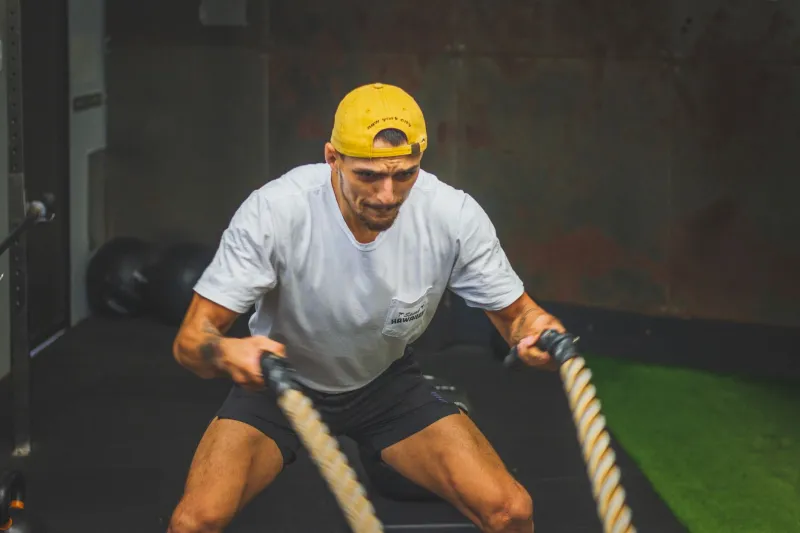
Today's top-tier athletes — across the NFL, NBA, MLB, MLS, and beyond — operate inside year-round conditioning systems so sophisticated that the concept of "off-season" has become more of a marketing term than a physiological reality. And while fans watching on STV365 might see a few quiet weeks between playoff runs and preseason hype, behind the scenes, those athletes almost never truly stop.
So what does that actually do to a human body? And more importantly — is it working?
The Science Behind the Grind
The framework driving modern year-round training is called periodization — a structured approach to cycling through different types of training loads, intensities, and recovery phases across a calendar year. It's not new; Eastern European Olympic programs were using periodization models back in the 1950s. What is new is how granular and tech-assisted it's become.
"We're not just talking about lifting heavy in the winter and tapering before games," explains Dr. Marcus Okafor, a sports physiologist who consults with multiple professional franchises. "Modern periodization is almost like software. You're programming the body in micro-cycles, meso-cycles, and macro-cycles simultaneously, tracking biometric data in real time, and adjusting on the fly."
Wearable tech — think WHOOP straps, Oura rings, GPS tracking vests — has given strength and conditioning coaches a live dashboard of an athlete's recovery status, sleep quality, heart rate variability, and even hormonal stress markers. The result is a training ecosystem that never fully powers down. It just changes modes.
The Mental Side Nobody Talks About Enough
Here's the part that doesn't make it into the hype reels: the psychological weight of never truly disconnecting.
Former NBA guard Devon Lattimore, who played nine seasons before retiring in 2022, put it bluntly in a conversation with STV365. "By year six, I stopped telling people when my 'off-season' started because it didn't really start," he said. "You'd have a week where the workouts were lighter, but your phone was still going, the nutrition protocols were still there, the film sessions were still there. Your brain never got the signal that it was okay to exhale."
Sports psychologists are increasingly flagging this as one of the hidden costs of the 365-day athlete model. Dr. Priya Menon, who works with collegiate and professional athletes on mental performance, says the absence of genuine psychological recovery can accelerate burnout in ways that don't show up in any biometric data.
"The body can adapt to a lot," she says. "But the mind needs contrast. It needs to experience not being an athlete for a little while, even if the athlete identity never fully turns off. When you remove that contrast completely, you start to see motivation erosion, emotional flatness, and in some cases, a kind of chronic low-grade anxiety that players often mistake for competitiveness."
Are the Results Actually There?
Fair question. If athletes are training harder and smarter year-round, you'd expect the performance numbers to reflect it — and in many sports, they do. NBA players are logging more efficient shooting splits deep into playoff runs. NFL wide receivers are maintaining elite separation speed well into their early thirties. MLB pitchers are — well, okay, MLB pitchers are blowing out their elbows at roughly the same rate as always, which tells its own story.
The gains are real in sports where conditioning translates directly to longevity and late-game execution. But the picture gets murkier when you zoom out.
Injury rates across major American sports have not dramatically declined despite the explosion in sports science investment. Soft tissue injuries — hamstring tears, ACL sprains, labrum damage — remain stubbornly persistent. Some researchers argue that year-round high-intensity training, even when periodized carefully, accumulates micro-damage faster than the body can fully repair it.
"We've gotten incredibly good at optimizing performance," says Dr. Okafor. "We haven't fully solved recovery. Those are two different problems, and we sometimes act like they're the same one."
The Athlete's Dilemma
For the athletes themselves, the calculus is complicated by money and competition. The NBA G League, the expanded college football playoff structure, the growing international soccer calendar — every layer of professional sport is adding more games, more exposure opportunities, more revenue-generating events. Sitting out to recover isn't just physically risky in terms of re-injury; it's professionally risky in terms of visibility.
"You're not just competing against the guy across from you on the field," Lattimore notes. "You're competing against the algorithm. If you're not showing up, you're not getting coverage. And if you're not getting coverage, you're not getting the contract extension."
This is where the streaming era has genuinely changed the stakes. Platforms like STV365 put live sports and athlete content in front of fans every single day of the year. That's great for viewers who want something to watch on a random Tuesday in February. But it also means the demand signal for athlete availability has never been stronger — and the pressure to be perpetually "on" filters all the way down to how training programs are designed.
What a Smarter Calendar Might Look Like
Not everyone in the sports science world is fully sold on the current model. A growing contingent of researchers and practitioners is pushing back on the idea that more structured training always equals better outcomes.
Dr. Menon advocates for what she calls "intentional disengagement windows" — periods of two to four weeks where athletes are genuinely encouraged to deprioritize sport-specific training and reconnect with non-athletic identity. "It sounds soft," she acknowledges, "but the research on motivation restoration is pretty compelling. Athletes who take real breaks often return with sharper focus and better injury resilience than those who grind straight through."
Some franchises are quietly experimenting with this approach, though few will publicly admit it in an era where off-season training footage is practically a PR strategy.
The Bottom Line
The 365-day athlete is real, and the science powering that model is genuinely impressive. Periodization, biometric monitoring, and precision nutrition have pushed human athletic performance into territory that would have seemed impossible a generation ago.
But the honest answer to whether it's making players better or burning them out faster is: probably both, depending on the athlete, the sport, and how intelligently the system is managed.
What's clear is that the old idea of a hard stop — a true off-season where the body and mind fully reset — isn't coming back. The calendar has been restructured around content, competition, and commerce, and athletes are adapting whether they want to or not.
For fans watching every live moment on STV365, that means more access, more coverage, and more of the athletes we love doing what they do best. For the athletes themselves, it means learning to find rest inside a machine that was specifically designed never to stop.