Rest Is a Four-Letter Word: How Modern Sports Science Talked Athletes Out of the Off-Season
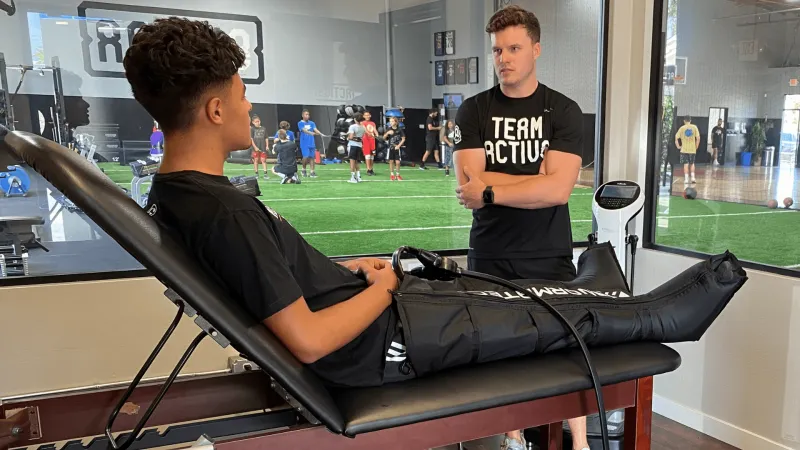
Photo: elite athlete recovery training sports medicine physical therapy, via cdn-jiaap.nitrocdn.com
Not too long ago, the off-season actually meant something. Baseball players went home to their ranches. NBA stars hit the beach. Football linemen, famously, ate whatever they wanted for three months and showed up to training camp looking like a completely different species. Rest wasn't a strategy — it was just what you did.
That world is basically gone now.
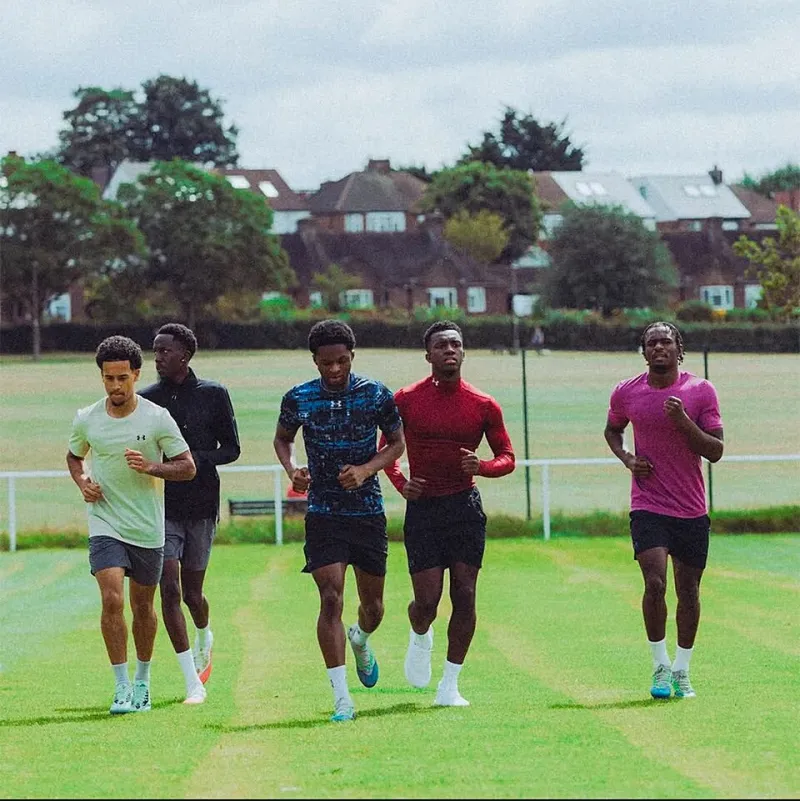
Today's elite athletes operate on a different clock. The off-season has been rebranded, restructured, and in many cases, quietly eliminated. In its place is something called "active recovery" — a term that sounds restful but functionally means you're still working, just at a slightly lower intensity. The science backing this shift is real. The results, in some cases, are genuinely impressive. But spend enough time talking to sports medicine professionals and veteran athletes who've lived through both eras, and a more complicated picture starts to emerge.
The Science That Changed Everything
The philosophical pivot away from full rest traces back to a fairly straightforward physiological argument. Complete inactivity — the kind where an athlete genuinely does nothing athletic for six to eight weeks — leads to measurable deconditioning. Cardiovascular fitness drops. Muscle mass erodes. Flexibility tightens. When athletes return to training after a true rest period, they spend the first several weeks just clawing back to baseline, which compresses the actual development window.
Sports scientists started arguing, with solid data behind them, that low-intensity maintenance work could prevent that regression without generating the kind of cumulative fatigue associated with full training loads. Mobility work, light cardiovascular activity, pool sessions, yoga — the idea was to keep the engine idling rather than letting it go cold.
On paper, it made a lot of sense. And for certain athletes, the results were hard to argue with. Quarterbacks who kept throwing during the spring looked sharper in September. Basketball players who maintained conditioning through the summer came into camp ahead of schedule. The performance metrics were real.
But here's where it gets complicated.
The Line Nobody Can Agree On
The problem with "active recovery" is that it exists on a spectrum, and that spectrum has been gradually, almost imperceptibly, pushed toward the more intense end. What started as light pool work and mobility sessions has, in many training programs, evolved into something that looks a lot like actual training — just without the official label.
Dr. Simone Hartley, a sports medicine physician who's worked with collegiate and professional athletes across multiple sports, puts it bluntly: "We've created a culture where athletes feel guilty about resting. The language around 'active recovery' has become a permission structure for coaches and organizations to keep athletes engaged year-round without technically calling it a training requirement. But the body doesn't know the difference between a mandatory workout and a strongly encouraged one."
The psychological dimension here is just as important as the physical one. Athletes who came up through the new system — the ones who've been told since high school that complete rest is essentially career negligence — often can't psychologically disengage even when they're given permission to. The anxiety of "falling behind" has been baked into their identity.
Veteran players who remember the old way describe something almost like culture shock when they first encountered modern off-season protocols. Marcus Thibodeau, a former NFL offensive lineman who played through the mid-2000s into the mid-2010s, remembers the transition vividly. "When I came in, guys went home. You saw them again in July and you figured out where everybody was at. By the time I was finishing up, guys were training together in May, posting workouts, getting chirped on social media if they weren't in the gym. The culture completely flipped."
What the Research Actually Says About Recovery
The science on recovery is, to put it charitably, messier than the fitness industry tends to acknowledge. Sleep research is probably the strongest argument for genuine downtime — studies consistently show that sleep is when the most significant tissue repair and hormonal restoration happens, and that chronic sleep disruption (which is common among athletes balancing year-round training with travel and media obligations) undermines virtually every performance marker.
There's also growing evidence that the nervous system needs genuine unloading periods that pure physical rest doesn't fully capture. Cognitive fatigue, decision-making speed, and reaction time all degrade under sustained high-stress conditions, and the stress of professional athletic competition doesn't stop accumulating just because the official season has ended.
Dr. Hartley points to a distinction that often gets lost in the active recovery conversation: "There's a difference between keeping tissues healthy and keeping systems loaded. You can absolutely do light movement to maintain joint health and blood flow. But if an athlete's nervous system, adrenal system, and psychological stress response never get a genuine reset, you're building on a foundation that gets shakier every year."
The career longevity question — whether year-round training actually extends careers or quietly shortens them — doesn't have a clean answer yet. The sample size of athletes who've trained this way from a young age and reached their late 30s is still relatively small. What sports medicine professionals are watching closely is the injury data, and some of what they're seeing is concerning. Soft tissue injuries, in particular, have trended upward across several major sports over the past decade, a period that coincides almost exactly with the mainstreaming of year-round training culture.
The Old Guard Weighs In
Ask athletes who played before the active recovery era whether they'd trade the old approach for the new one, and the answers are genuinely mixed. Some wish they'd had access to modern sports science. Others are quietly skeptical that the gains are worth what's being given up.
"I feel like I got to be a person in the off-season," says Thibodeau. "I had an identity outside of football for a few months every year. I think that kept me sane. A lot of guys now, they don't have that. They're athletes twelve months a year and I don't know what that does to you over time."
That identity question — the psychological cost of being permanently in athlete mode — is something sports psychologists are increasingly flagging as an underexamined piece of the conversation. Burnout, anxiety, and early retirement are all outcomes that can trace back to an athlete who never learned to exist outside their sport.
Where This Goes From Here
The year-round athlete isn't going away. The financial incentives, the competitive pressures, and the genuine performance benefits in certain contexts are all too significant to reverse course entirely. But there's a growing contingent of sports medicine professionals pushing for a more nuanced approach — one that distinguishes between smart maintenance and chronic overload, and that takes psychological recovery as seriously as physical conditioning.
The best programs, the ones that seem to actually be extending careers rather than burning through them, are the ones that build genuine deload periods into the calendar. Not "you can rest if you want to" — actual scheduled downtime that's treated as seriously as any other training block.
Because here's the thing about the human body that no amount of sports science has managed to engineer around: it's still a biological system. It still needs to recover. The question isn't whether rest matters. The question is whether the people making decisions about athlete welfare are brave enough to actually give it to them.