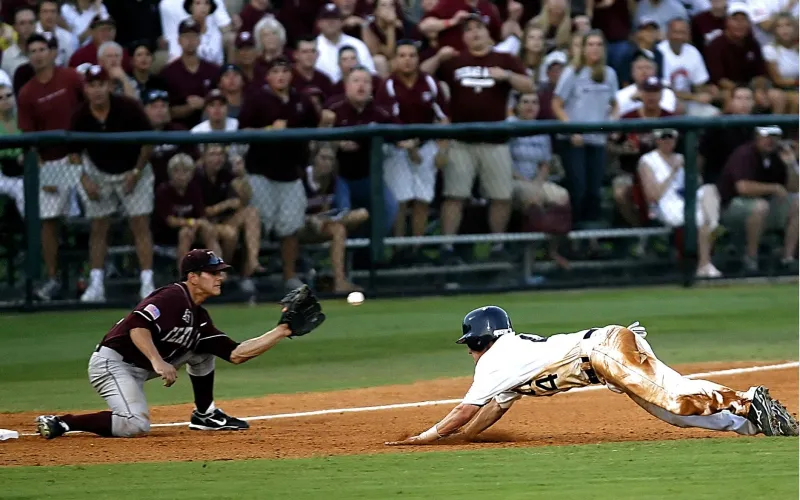
Stop Rewatching the '98 Finals and Start Watching Tonight's Game

Somewhere right now, a sports fan is three hours deep into a game that ended twenty-six years ago. They already know the score. They watched it live the first time, maybe caught a replay in 2011, and now here they are again — comfortable, cozy, and completely insulated from any kind of surprise. Meanwhile, a genuinely wild game is happening in real time on another tab they haven't opened yet.
This is the nostalgia trap. And streaming platforms, bless their well-intentioned algorithmic hearts, have made it easier than ever to fall into.
The Vault Is Real — And It's Dangerous
Let's be clear: the fact that you can pull up the 1986 World Series, Game 6, or the 2016 NFC Championship on demand is genuinely incredible. Platforms like ESPN+, Peacock, and Paramount+ have built out archives that would've made your ten-year-old self absolutely lose their mind. Documentaries, full-game replays, highlight compilations, mic'd-up footage — the depth of available content is staggering.
But here's the thing nobody talks about. That same depth creates a gravitational pull. When you're tired, stressed, or just not sure what to watch, the calculus changes. A game with a known outcome feels safe. You're not risking two and a half hours on something that might end in a blowout or a crushing loss for your team. You're revisiting something that already delivered. The emotional payoff is pre-certified.
That's not fandom. That's comfort food.
Why Our Brains Reach for the Replay Button
Psychologists have a name for this kind of behavior: nostalgia-driven avoidance. When the present feels uncertain or overwhelming, the mind naturally gravitates toward memories and experiences that feel resolved. Sports, with their built-in tension and unpredictable outcomes, can actually trigger low-level anxiety in invested fans — especially if your team is in a tight stretch of the season.
So instead of sitting through the genuine stress of a tied game in the fourth quarter, your brain quietly suggests: hey, remember when Jordan hit that shot over Russell? That was great. Let's watch that instead.
It's not laziness. It's self-protection. But it comes at a cost.
What You Actually Lose When You Skip Live
Here's what no replay — however crisp the HD transfer — can ever give you: the moment before you know.
That's the entire product live sports is selling. The suspended second before the field goal attempt clears or misses. The count going full with the bases loaded. The overtime period where absolutely anything could happen. That's the raw material of sports entertainment, and it only exists once. When the final whistle blows, it's gone forever. The replay is a photograph of a feeling, not the feeling itself.
Think about the moments that have actually changed how you watch sports. The ones you still talk about. Almost every single one of them hit you live — or you heard about it live and scrambled to find a stream. Nobody's defining sports memory is finding out about a classic game three weeks later and watching it with full knowledge of the result.
The unpredictability is the point. It's always been the point.
Streaming Platforms Are Built to Keep You in the Archive
Here's where it gets a little uncomfortable. The platforms themselves aren't exactly steering you toward live content when you open the app. Autoplay queues, curated "greatest games" playlists, and algorithmically served nostalgia content are all designed to maximize time spent on platform — and a three-hour classic game replay counts the same as a three-hour live broadcast in the engagement metrics.
That doesn't mean the platforms are acting in bad faith. They're just giving fans what fans click on. But it does mean the responsibility to seek out live content falls more on the viewer than it probably should. Nobody's sending you a push notification that says "Hey, tonight's game between two teams fighting for a playoff spot is actually must-watch TV right now." At STV365, we'd argue that's exactly the kind of nudge sports fans need more of.
Live sports aren't just programming. They're events. They have a start time, a duration, and a conclusion that only happens once. That's a fundamentally different relationship with content than anything sitting in an archive.
The Case for Showing Up in Real Time
There's a reason tailgates exist. There's a reason sports bars fill up on Sunday afternoons. There's a reason your group chat loses its mind when something unexpected happens during a live game. Community around live sports is wired into the experience — and that community only functions in real time.
When you rewatch a classic, you're watching alone in a very real sense. Even if someone's in the room with you, there's no shared discovery. Nobody's gasping at the same moment because the outcome is already known. The collective experience — the thing that makes sports culture actually feel like culture — requires everyone to be in the present tense simultaneously.
Live sports are also, frankly, where the new legends get made. The players who will be the subjects of future nostalgia trips? They're playing right now. Tonight's game might be the one people rewatch in 2045 with total comfort and certainty. But you get to watch it before it becomes a classic. That's a privilege that expires the second the final buzzer sounds.
How to Break the Cycle
Practically speaking, breaking the nostalgia loop isn't complicated — it just requires a little intentionality.
Start by keeping a loose live sports calendar. Not an obsessive spreadsheet, just a general awareness of what's on and when. A quick Sunday scan of the week's schedule takes maybe five minutes and gives you something to look forward to instead of something to fall back on.
When you feel the pull toward the archive, ask yourself one honest question: Is there anything live I could be watching right now? More often than you'd expect, the answer is yes. Regional matchups, international leagues, college games, minor league action — there is almost always something happening in real time that deserves an audience.
Save the classic game for a night when genuinely nothing else is on. Use it as a reward, not a default.
The Present Moment Has a Short Window
Streaming has done extraordinary things for sports fans. The access is unprecedented, the content is deep, and the ability to catch up on history is genuinely valuable. None of that is worth dismissing.
But the archive will always be there. Tonight's game won't be. The tension in a live broadcast, the shared anxiety of not knowing, the possibility that something genuinely historic could unfold in front of you — that's not something any platform can recreate after the fact.
The best entertainment isn't the stuff that's already been resolved. It's the stuff that's still being written. Tune in.